

Most of the women I work with have tried fasting before. Some loved it at first. Others white-knuckled their way through, felt shaky and irritable, and quietly decided it “wasn’t for them”.
If that’s you, I want you to know: it probably wasn’t you that failed. It was the approach.
Fasting is a stressor, and that’s not a bad thing
When you go longer without food, your body notices. That small, short-term stress is part of why fasting works. It nudges your body to switch fuel sources and turn its attention to repair and clean-up.
But here’s what most fasting advice leaves out: your body adds that stress to everything else it’s already carrying. Poor sleep. A busy mind. Blood sugar ups and downs. Years of dieting. Pain. Worry.
If your bucket is already close to full, fasting can be the thing that tips it over. And a body that feels unsafe doesn’t repair. It holds on.
Why I start with calm
This is why everything I teach follows my CALM Framework™, in this order:
- C – Calm the Nervous System
- A – Activate Cellular Repair
- L – Lower Stress Load
- M – Metabolic Reset
Calm comes first because your nervous system decides how your body responds to everything that follows, fasting included. When your body feels safe, a longer overnight window feels manageable, even easy. When it doesn’t, the same window can feel like one more pressure your body didn’t ask for.
Fasting a woman’s way
Women aren’t small men. Our hormones are sensitive to stress and to food, and they shift across the month and across the seasons of our lives.
That’s why I don’t believe in one-size-fits-all fasting. There are times in your cycle when your body welcomes a longer fast, and times when it needs more nourishment and a gentler approach. In perimenopause and beyond, a steady monthly rhythm still helps.
Your fasting rhythm should fit your body and your life, not the other way around.
Where to start
You don’t need to start with a long fast. You don’t need to start with fasting at all.
Start here:
- Calm first. Before meals, take three slow breaths, letting each breath out be a little longer than the breath in.
- Widen your overnight window gently. Finish dinner 30 minutes earlier, or have breakfast 30 minutes later. That’s it for now.
- Notice how you feel. Energy, sleep, mood, hunger. Your body is always giving you information. Learning its language is part of the work.
Small, calm steps, repeated often, are what your body listens to.
A note before you begin
If you take medication (especially for blood sugar or blood pressure), are pregnant or breastfeeding, or have a history of disordered eating, please talk with your doctor before changing when you eat.
Want to go further?
Here are two gentle ways to take the next step:
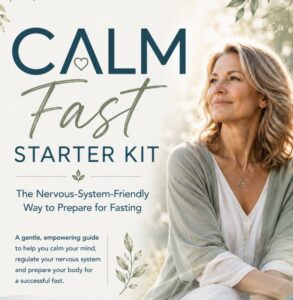
Free: CALM Fast Starter Kit
A gentle place to start. Prepare your body before you fast.
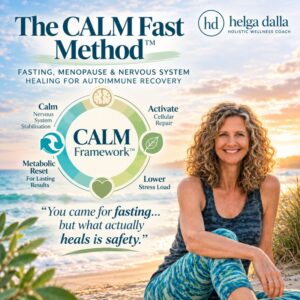
The CALM Fast Method Guide
Fasting with your cycle or your season of life, step by step.
With love,
Helga
Recent Comments