
Fasting can be a beautiful healing tool for women. It can calm inflammation, steady your energy and help your body remember how to burn its own fuel.
But I see so many women give up on fasting because it left them shaky, exhausted, anxious or sleeping badly. And most of the time, it isn’t fasting that failed them. It’s how they started.
Here are five common fasting mistakes I see, and what to do instead, so your body can actually respond.
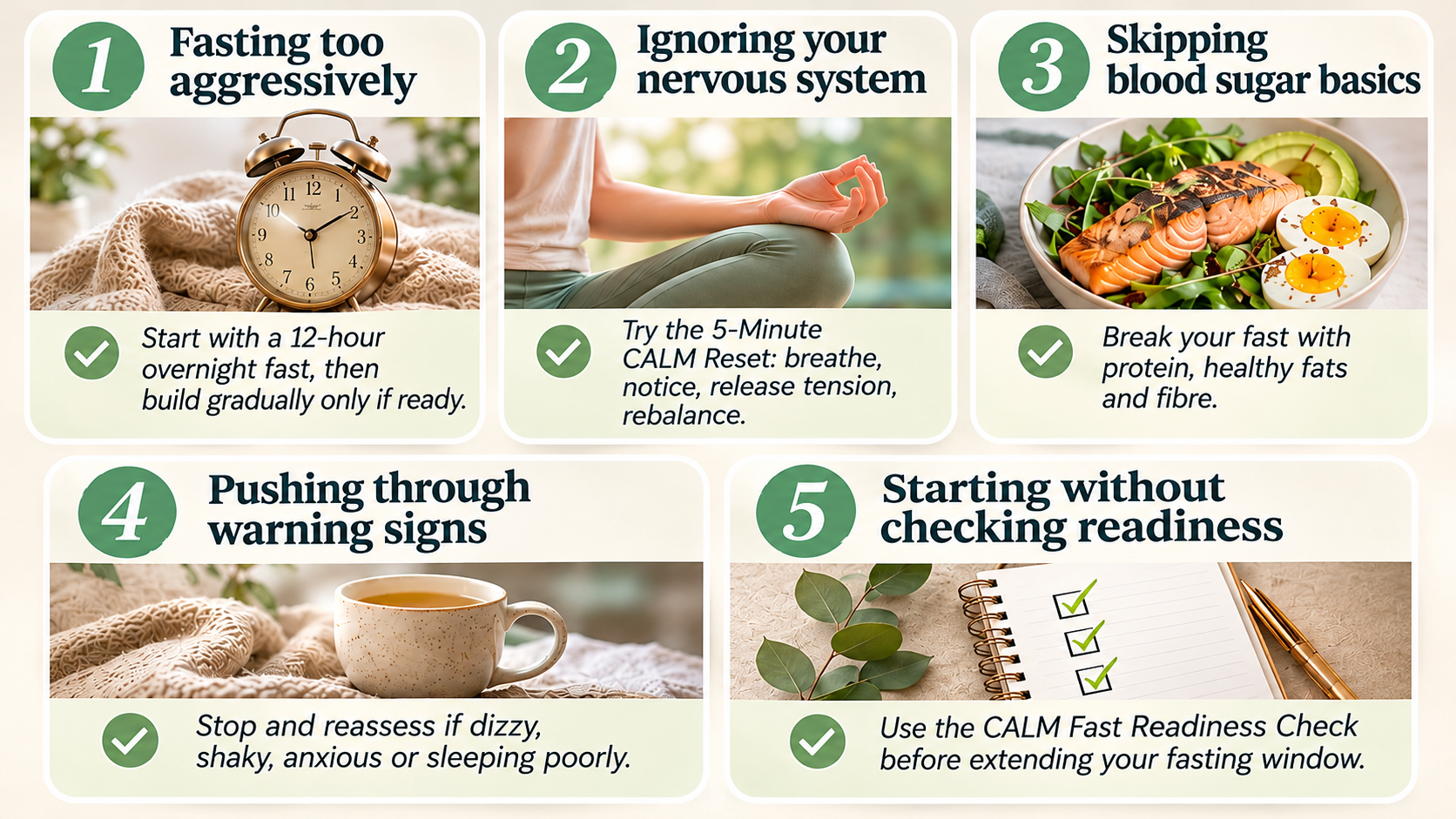
Mistake 1: Fasting too aggressively
It’s tempting to jump straight into long fasts because you’ve read about the benefits. But if your body is used to eating often, a sudden 18-hour fast can feel like an emergency, and your stress hormones will treat it like one.
Do this instead: start with a 12-hour overnight fast. Once that feels steady, extend gradually to 13–14 hours, and only move towards 14–16 hours if your energy stays calm and even. Slow and steady builds trust with your body.
Mistake 2: Ignoring your nervous system
This is the step most fasting plans skip completely. If your body is already stressed, inflamed or running on fight-or-flight, fasting becomes one more stressor. I like to put it simply:
Stress + restriction = survival mode.
Safety + structure = repair and regulation.
Do this instead: calm your body first. My 5-Minute CALM Reset takes just a few minutes a day:
- C – Center your breath: inhale for 4, hold for 2, exhale for 6.
- A – Acknowledge what you feel: notice where tension or tightness sits.
- L – Let go physically: shoulder rolls, gentle stretches, shake out your hands and feet.
- M – Mindful rebalance: one hand on your heart, one on your belly, and remind yourself that you are safe.
Mistake 3: Skipping blood sugar basics
If your blood sugar is up and down, fasting can push cortisol and inflammation up rather than down. That’s when the cravings, crashes and “hanger” kick in.
Do this instead: follow my First 3 Bites Rule when you break your fast: start with protein (eggs, fish, chicken, Greek yoghurt), healthy fats (avocado, olive oil, nuts, seeds) and fibre (leafy greens and other vegetables). Stable blood sugar means a calmer nervous system.
Mistake 4: Pushing through warning signs
Fasting is not a test of willpower. Your body talks to you, and some signals mean “not yet”.
Do this instead: stop and reassess if you notice dizziness, shaking, irritability, anxiety spikes or poor sleep. Shorten your window, eat a nourishing meal and come back to calming your body first. Fasting should feel calm and sustainable, never forced.
Mistake 5: Starting without checking readiness
Not every body is ready to fast right now, and that’s okay. Starting before you’re ready is one of the quickest ways to burn out and decide fasting “doesn’t work for you”.
Do this instead: use my CALM Fast Readiness Check before you extend your fasting window. It’s a simple checklist to help you see whether your body is ready to begin gently and sustainably.
Ready to start the gentle way?
If you’d like to learn more about matching your fasting and your food to your cycle, read my post on how to start fasting without feeling starving.
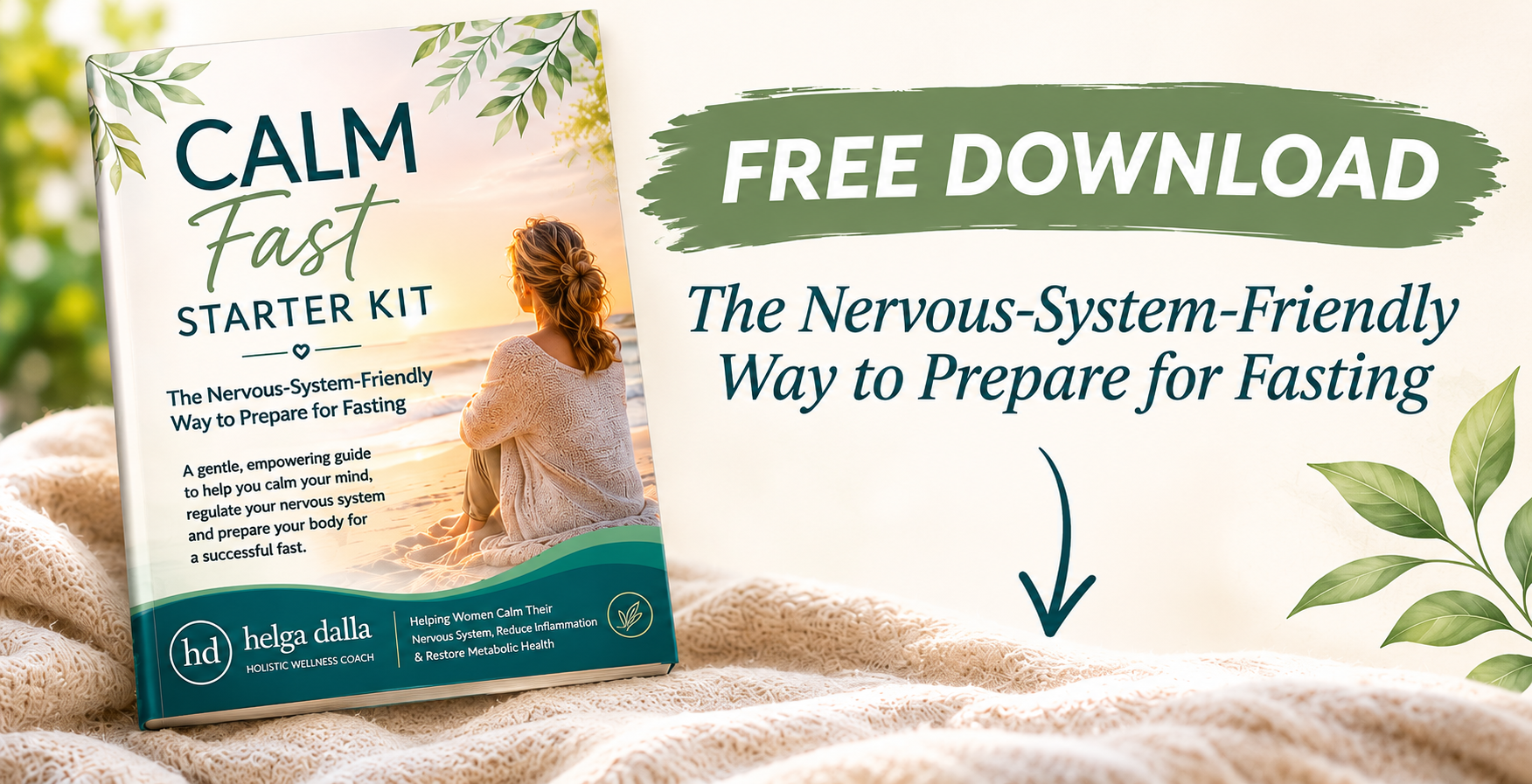
And everything in this post, including the 5-Minute CALM Reset, the 3-Step CALM Start and the CALM Fast Readiness Check, is waiting for you in my free CALM Fast Starter Kit.
Fasting isn’t suitable for everyone. Please check with your doctor first if you’re pregnant or breastfeeding, have a diagnosed eating disorder, have diabetes or unstable blood sugar, or are under medical supervision.
Ready for one-on-one support? If you’re done going it alone and ready to make real changes, let’s talk about what your body needs.
With love,
Helga 💚
Recent Comments